
At our dental office, we often get asked how long dental crowns last. These facts may amaze you – with proper care, a dental crown can last for a long time! This blog post will explore why dental crowns are such a lasting investment.
Dental crowns are a fantastic way to fix your smile’s appearance in a short time. Crowns can change the shape or size of teeth, correct minor and major imperfections that make teeth look crooked or stained, and protect overall tooth structure.
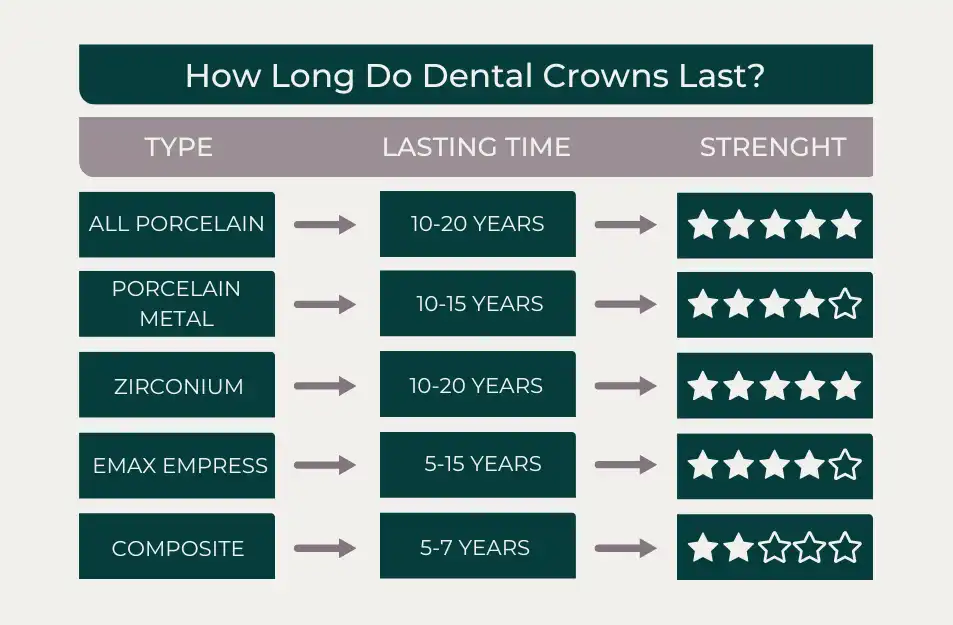
A dental crown is not expected to last a lifetime and usually needs to be replaced after around 10-15 years. Although dental crowns are not common to last up to 20 years, durability can vary based on different factors.
How Long Does a Dental Crown Last?
Most crowns will last for fifteen years without a problem. But with proper oral care, they can last far longer than that. If you practice excellent dental hygiene, the chances are that your Crown will outlive you.
Dental Crown Types and Durability
When selecting a crown, you should always ask about the warranty. Our dental practice guarantees that your teeth will last for at least eight years through materials like Zirconium or alloyed metals.
How Long Does a Zirconia Dental Crown Last?
You can expect a zirconium crown to survive 10-15 years, provided you maintain good oral hygiene. This natural-looking material is less prone to splitting or cracking than other ceramic options and offers excellent durability with its strong resistance against tooth decay!
How Long Does a Metal Dental Crown Last?
Gold crowns are used to restore teeth that have fallen out. These strong and durable metal dental appliances protect against breakages, as they’re 92% more resistant than their ceramic or porcelain-fused crowns! A study conducted in 2015 found gold crowns last an average of 10 years before needing replacing; 87% over 20 years, with a 74% survival rate after 30 years.
How Long Does a Porcelain-Fused-to-Metal Dental Crown Last?
Porcelain-fused-to-metal (PFM) crowns are one of the most common choices. To create these, a specialized type of ceramic — porcelain is either fused with gold and silver alloys for durability while also looking beautiful.
How Long Does a Temporary Crown Last?
Temporary dental crowns are often used until the wearer has received their permanent solution. These are either acrylic or stainless steel and should only be fitted for short periods before being replaced with newer ones made from better materials.
What Factors Affect Durability and Permanence of Dental Crown?
The short answer is: no. Crowns aren’t a permanent dental solution because they must be replaced after around 10-15 years, depending on the material used.
1- The Material Used
The material your crowns are made from will likely impact how long they last. Metal Porcelain Crowns have a lifespan of around five years, while Zirconium Crowns should last between 10-20 years.
2- Choosing a Highly Experienced Dentist
When it comes to your crowns, you want to guarantee that you put your confidence in the hands of a dentist with extensive experience in cosmetic dentistry.
3- Maintaining Good Oral Hygiene
After you’ve had your crowns fitted, it’s essential to maintain good oral hygiene to help prolong their lifespan.
4- Regular Dentist Visits
We recommend visiting your dentist regularly for cleanings and checkups twice a year to ensure no plaque or tartar buildup on your crowns over time.
5- Avoiding Using Your Teeth as Tools
Your crowns are like natural teeth because they are vulnerable to cracks and chips. Avoid chewing on solid objects like pens.
What Factors Affect The Longevity Of Your Dental Crown?
- The condition of the treated tooth: Your Crown’s durability depends on its health and structure.
- Your dental hygiene routine: Should include brushing and flossing your teeth at least twice daily.
- Visiting your dentist: Go at least once every six months.
- If you have Bruxism: Grinding or clenching your teeth while you sleep can wear down the surface of a crown.
Turkey Crowns Before and After
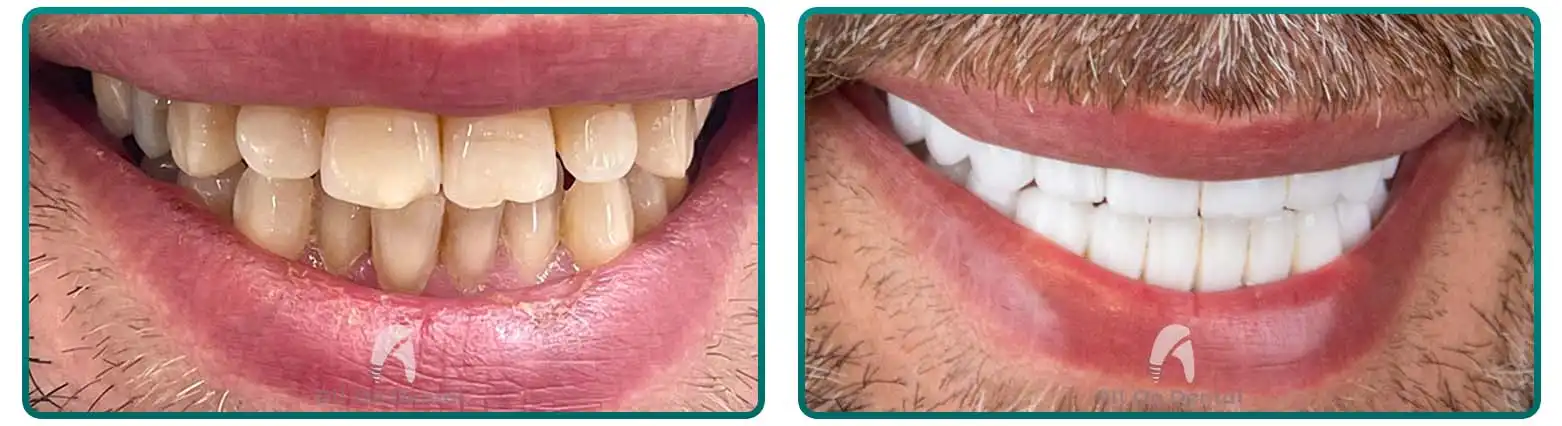
Millions of people travel each year to Turkey for dental crowns. Dental crowns are great cosmetic and restorative treatments. Commercial airlines have improved their flights, making it even easier to access health services abroad.
How Much Does It Cost for Crowns in Turkey?
One of the most typical questions dental patients ask is, “How much does a dental crown cost in Turkey?” We offer Emax Empress Crowns and Zirconium Crowns at competitive prices.
What is a Full Set of Crowns?
A full set of crowns is several that cover the whole frontal part of your teeth or the visible ones when you smile widely. This number varies from patient to patient, usually between 16 and 20 in even numbers.
Are Turkey Crowns Good?
Dental crowns in Turkey offer patients the best quality for their dental implants, bridges and other dental treatments. Cosmetic dentistry has significantly improved in the past decade, and we aim to make your smile more attractive than ever with our top-notch clinics and state-of-the-art technologies.
Why Choose Istanbul for your Crowns?
The Istanbul area has a tradition of providing medical and dental treatment, which means that you can be sure that your medical experience will be comfortable and enjoyable. Istanbul offers high-quality facilities and equipment, ensuring you receive the best possible care.
How to Book Your Appointment For Your Crowns?
We know that the best way to get your crowns done is by booking an appointment with a specialist at All On Dental. Contact us if you’re looking for information or are ready to book your dental crown treatment.
Do They Shave Your Teeth For Crowns?
Your dentist should shave your tooth enamel before installing a permanent crown. Shaving facilitates the bonding of the new piece of restoration with the tooth.
In Which Case Can Crowns Chip or Break?
Teeth are strong, and dental crowns are more substantial depending on their composition. However, crowns can break from a blow to the face if you have bruxism or clench or grind your teeth at night when you sleep.

How Will I Know When My Dental Crowns Need to Be Replaced?
Common signs that your dental Crown has reached the end of its lifespan include X-rays or CT scans. But, there are some other factors you should keep an eye out for:
- Pain, gum tenderness, and swelling around the Crown
- The Crown is unstable: If you feel uncomfortable that your Crown is moving or not as fixed
- Damage or small crack to the Crown
Dental Crowns Alternative: Do Veneers Offer a Longer-Lasting Solution?
Veneers, like crowns, are a popular dental restoration method. Prices for both types tend not to change much between visits and treatments (usually around €160), but they can be less durable than their solid gold counterparts.
Do You Need a Night Guard After Dental Crowns?
After you get dental crowns, you may be wondering if you need to use a night guard. It is generally recommended to use a night guard if you have a history of grinding your teeth.
How do I select a shade for Crowns?
Here are some helpful tips on how to choose the perfect shade:
- Brush your teeth before your appointment
- Choose the colour shade of your new crowns at the beginning of your appointment
- Wear light-coloured or dark clothes without distracting makeup
- Select under incandescent or fluorescent lighting, then move near a window
- View the colour-shade tab tooth at eye level
- Make choices quickly. Trust your first impressions
- Use natural light for the final shade selection
- Have more than one person assist with shade selection
Which Crowns look most natural?
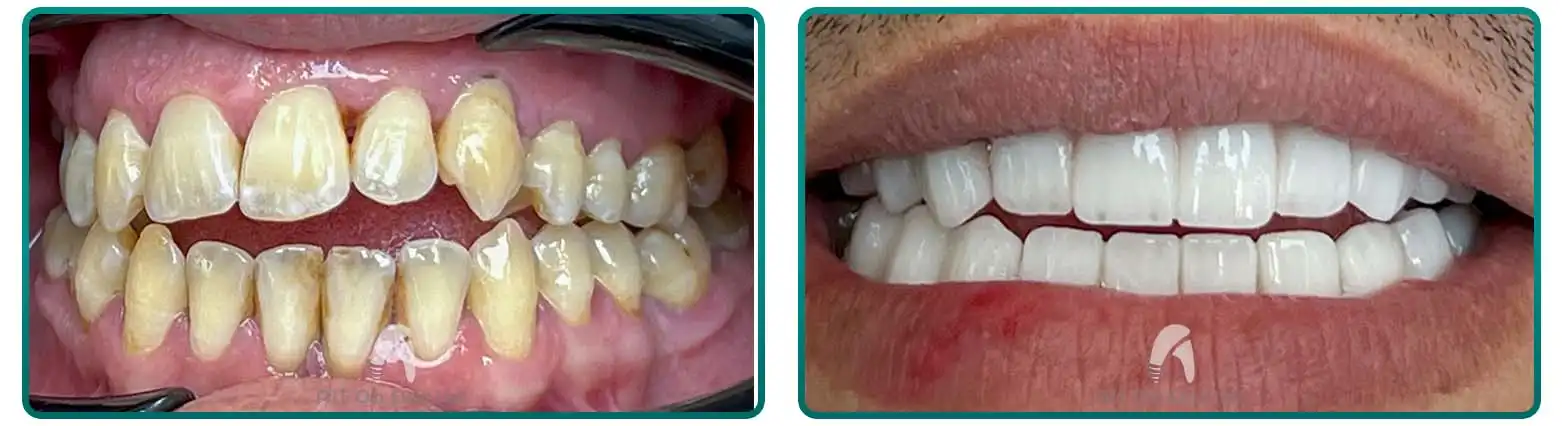
Emax Empress porcelain crowns are the best option for front teeth restorations. They provide the most natural look by matching your surrounding teeth in size, shape, and colour. The porcelain is biocompatible and has no metals, so it is toxic-free.
Does your bite change with Crowns?
If so, they may be too high or too low. The root of your problem could be that your Crown is not the right shape (round or square) or size to match your tooth.
Do Crowns Feel Like My Normal Teeth?
A crown on your tooth and fitted correctly should feel like a healthy natural tooth. You do not notice that it’s even there, except that it feels good.
What’s The Best Crowns Material?
While dentists can use many different materials to fill a tooth, the one that provides the most natural look is porcelain or ceramic. These crown materials match your surrounding teeth in colour, shape, and size.
Can I remove the Crowns in the future and use my original teeth?
The Crown will create an entirely new crown over the existing tooth but won’t remove any tooth structure. You can’t use your original teeth again.
Is there a warranty for Crowns?
The warranty policy for crowns at All On Dental is provided by our clinic. In case of damage or break, we will replace the crowns free of cost within a specified timeframe. We also provide hotel accommodation, transportation and repairs with our guarantee policy.
What can I eat after dental crowns?
The best advice is to eat soft foods so you don’t damage the area where the dental crowns are placed. You should also avoid foods at extreme temperatures.
Here are some items you can eat after dental crowns:
- Soft bread or rolls
- Mashed potatoes
- Soups
- Yoghurt
- Boneless Meat
- Soft Nuts
What can’t I eat after Crowns?
It is recommended to avoid some foods that could cause damage to your new teeth:
- Hard and crunchy foods like nuts and chips
- Sticky foods like gum and candy
- Sugary foodstuffs and liquids
We have listed full post-operative instructions about what you can and cannot eat after dental crowns. Check our Dental Crowns Post-Operative Care guide.
Can you get a crown with a root canal?
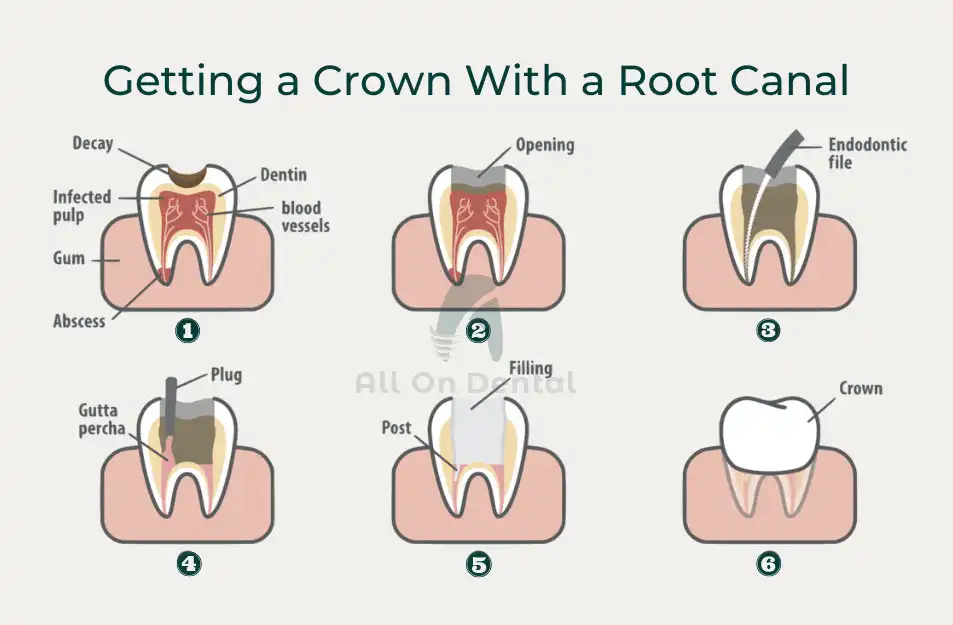
After the root canal, your dentist may suggest crowning it to rebuild your tooth. Teeth in the back of the mouth, such as premolars and molars, are more likely to require a crown.
A crown may help protect the tooth from future damage and restore it to its normal function. It also prevents the tooth from breaking.
Can you get a crown without a root canal?
A dental root canal procedure is usually performed to save a tooth that is severely decayed or infected. While it is possible to get a dental crown without a root canal, it is not always recommended. Crowns are meant to protect the tooth; sometimes, without a root canal, the tooth will not be firm enough to support a crown.